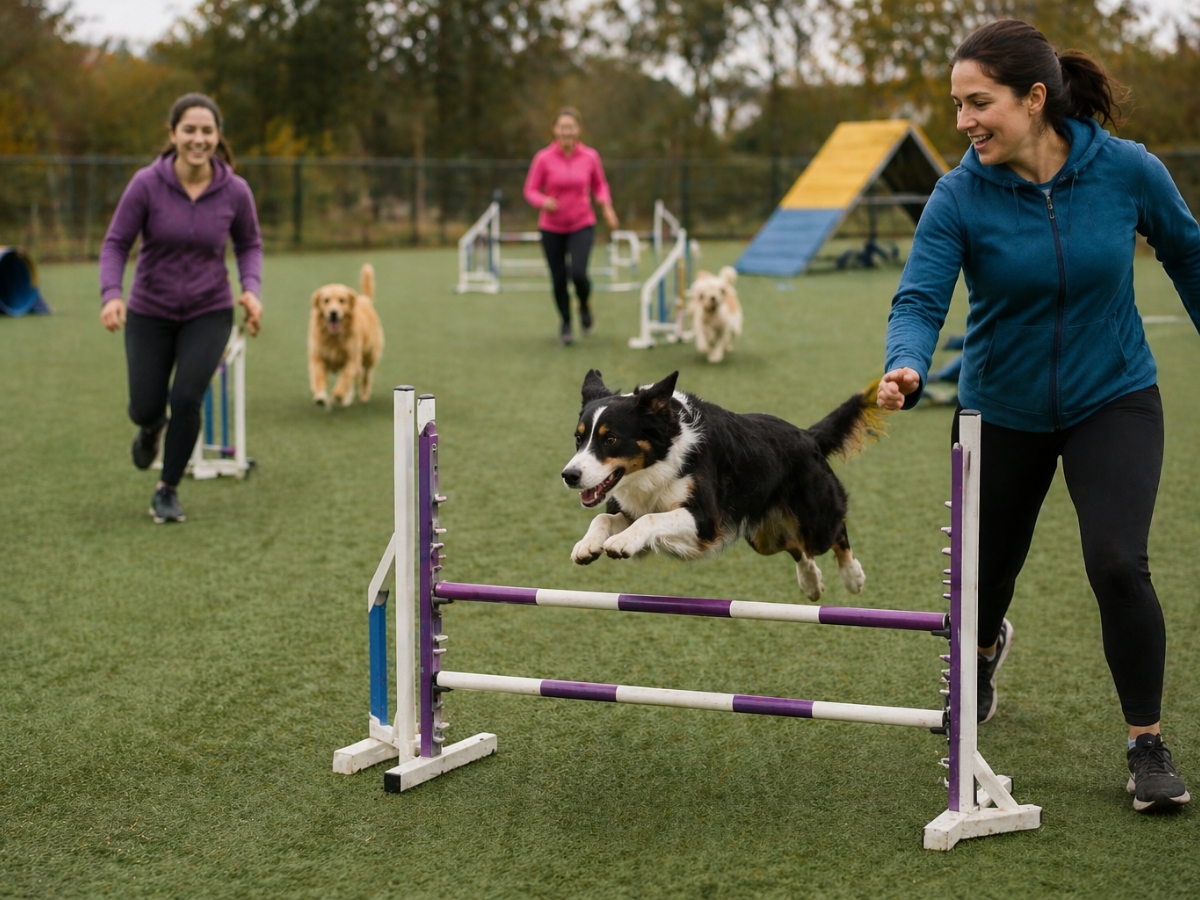
Some dogs need more than a daily walk to stay balanced. They need a challenge that engages both body and mind. Agility training techniques provides that outlet, turning exercise into a structured activity that builds focus, confidence, and control.
Group classes agility training add another layer of benefit by introducing social interaction in a controlled setting. Dogs learn to navigate obstacles, respond to cues, and stay engaged despite distractions around them.
This helps improve behavior, strengthen communication with their handler, and channel energy in a positive way. With the right environment and guidance, group agility training keeps dogs mentally stimulated, physically active, and consistently engaged in a way that supports long-term development.
What Are Dog Agility Group Classes And How Do They Work?
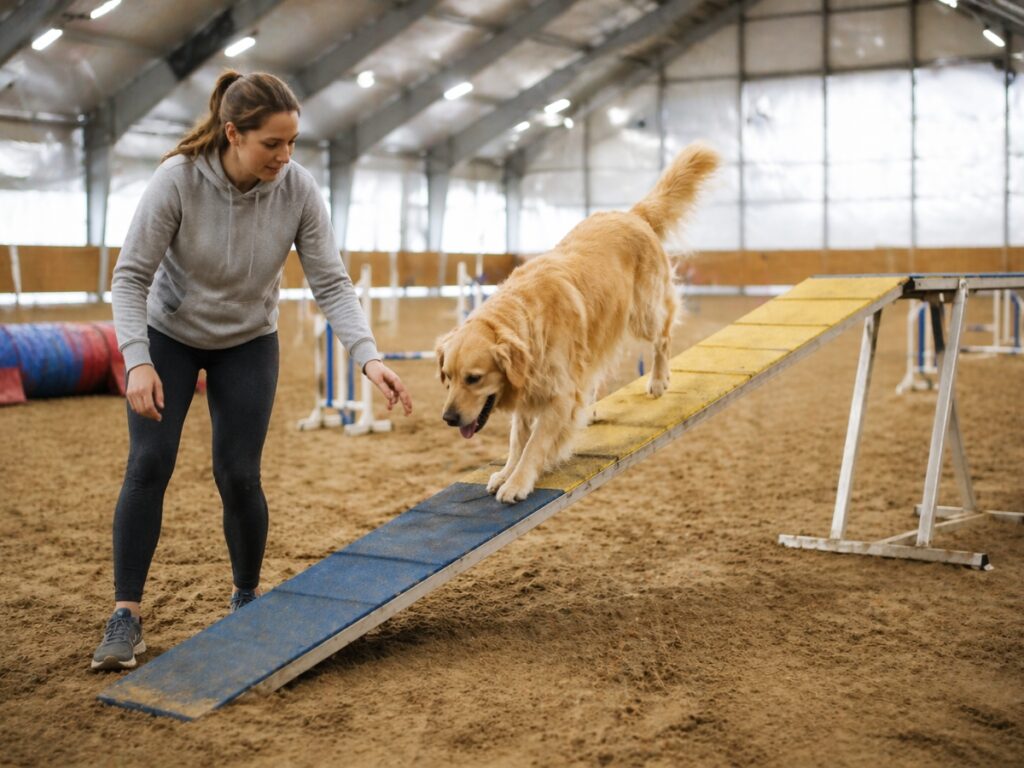
Dog agility group classes are structured training sessions where dogs learn to move through obstacle courses with guidance from their handlers.
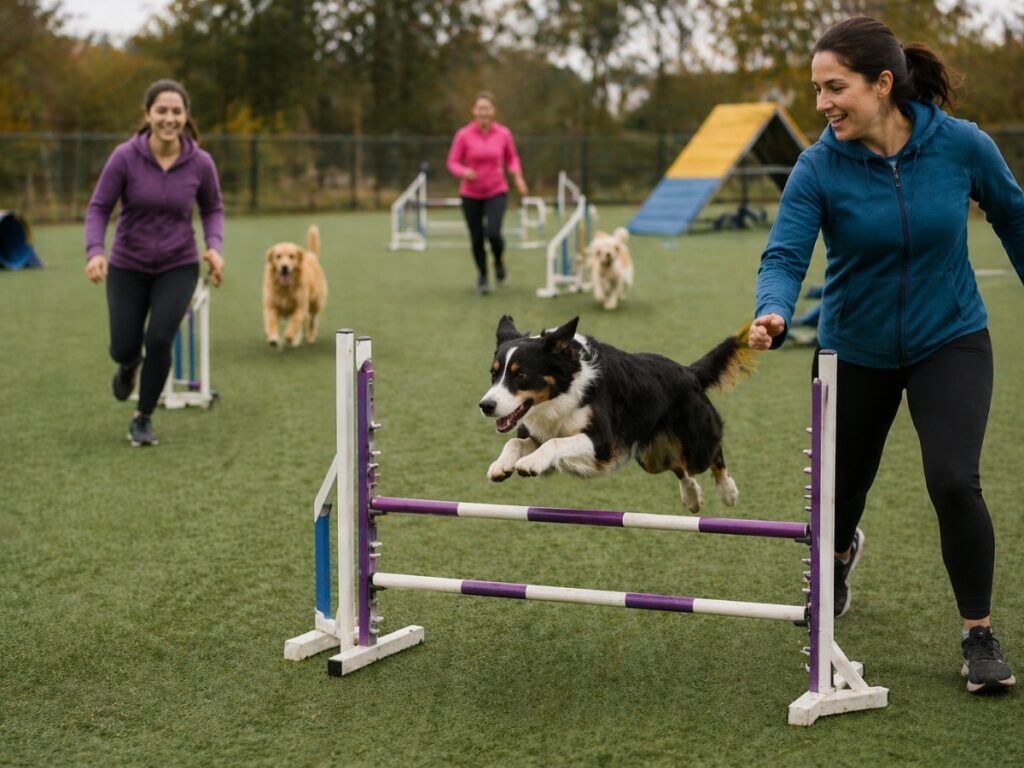
These courses typically include jumps, tunnels, weave poles, and other elements that challenge both physical coordination and focus. The goal is not just speed, but clear communication between dog and handler.
In group classes agility training, instructors guide participants through each exercise step by step. Dogs are introduced to obstacles gradually, allowing them to build confidence while learning proper technique.
At the same time, handlers develop timing, positioning, and cueing skills that help their dogs navigate the course smoothly.
How Do Group Classes Agility Sessions Improve Dog Behavior?
One of the biggest benefits of group classes agility training is how it strengthens everyday behavior. Dogs learn to focus even with distractions around them, which can translate into better responsiveness at home or in public spaces.
The structured nature of the class also reinforces consistency, helping dogs understand expectations more clearly. Agility exercises naturally encourage problem-solving.
As dogs learn how to approach different obstacles, they become more adaptable and mentally engaged. This mental stimulation can reduce boredom-related behaviors and support overall emotional balance.
Handlers also play an active role in shaping behavior. Through repetition and guidance, they learn how to give clearer cues and reward the right actions at the right time. This improves communication in a way that goes beyond the agility course.
What Makes The Group Setting Unique For Training?
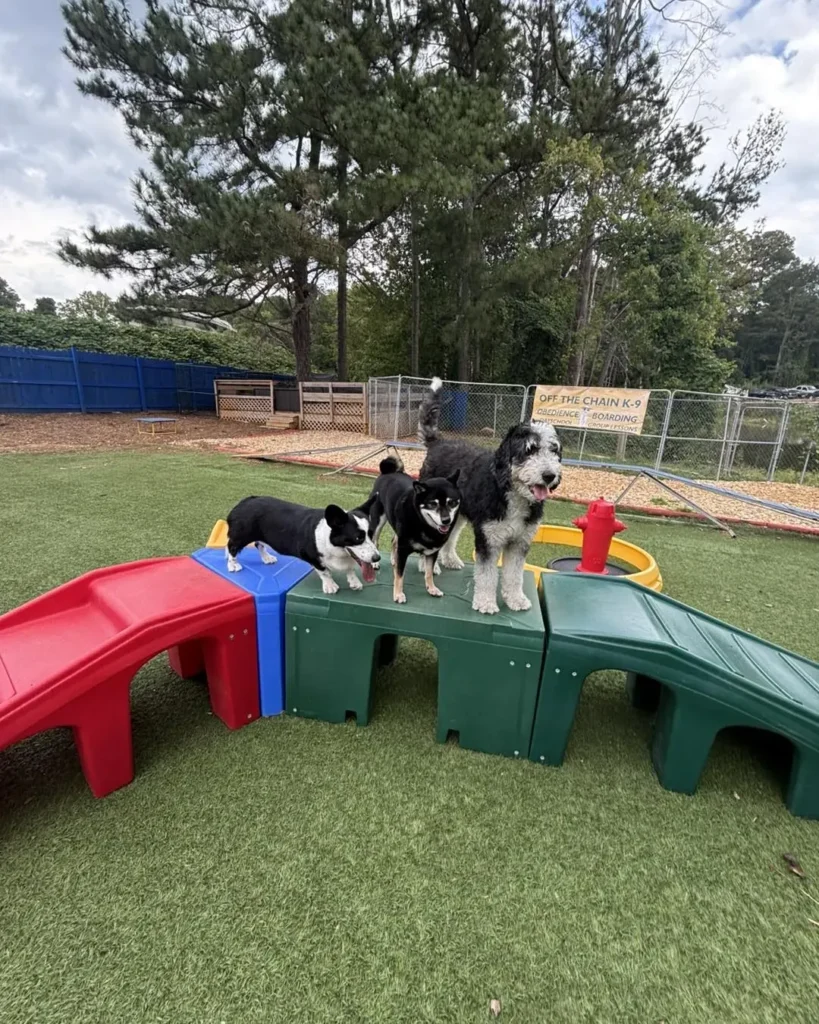
Training in a group setting offers a different experience compared to one-on-one sessions. Being around other dogs introduces real-world distractions in a controlled environment. This helps dogs learn to stay focused even when there is movement, noise, or excitement nearby.
For many owners, group classes agility sessions also create a sense of shared progress. Watching other teams work through challenges can provide useful insights and encouragement. It becomes easier to stay motivated when you see how skills develop over time, both in your own dog and in others.
Instructors often tailor exercises to suit different skill levels within the group. Beginners might focus on basic obstacle introduction, while more experienced dogs work on refining speed and precision. This flexibility allows each team to progress at a comfortable pace without feeling rushed.
How Do Handlers Learn To Guide Their Dogs Effectively?
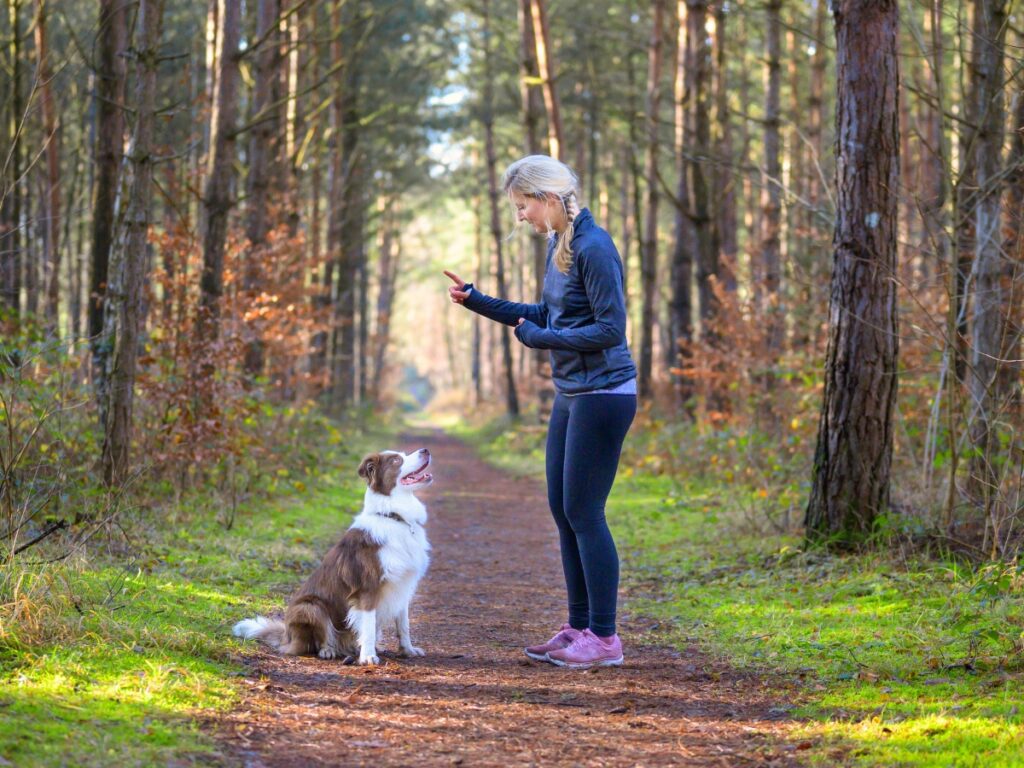
A key part of agility training is teaching handlers how to communicate clearly. This involves more than verbal commands. Body positioning, movement, and timing all influence how a dog responds on the course.
In group classes agility sessions, instructors demonstrate how small adjustments can make a noticeable difference. For example, where you stand or how you move can guide your dog toward the correct path without needing constant verbal direction. Over time, these subtle cues become second nature.
Handlers also learn how to read their dog’s behavior more accurately. Recognizing signs of hesitation, excitement, or confusion allows for quicker adjustments during training. This awareness helps create a smoother and more enjoyable experience for both dog and owner.
Why Consistency Matters In Group Classes Agility Training
Progress in agility comes from regular practice and steady improvement. Attending group classes agility sessions consistently helps reinforce what both dog and handler have learned. Each session builds on previous skills, gradually increasing confidence and coordination.
Consistency also helps dogs become more comfortable with the training environment. As they grow familiar with the structure and expectations, they are more likely to stay focused and engaged. This makes each session more productive and enjoyable.
Over time, group classes agility training becomes more than just an activity. It turns into a shared routine that strengthens the bond between dog and handler while supporting physical fitness and mental sharpness.
Understanding Dog Agility Training And Group Formats
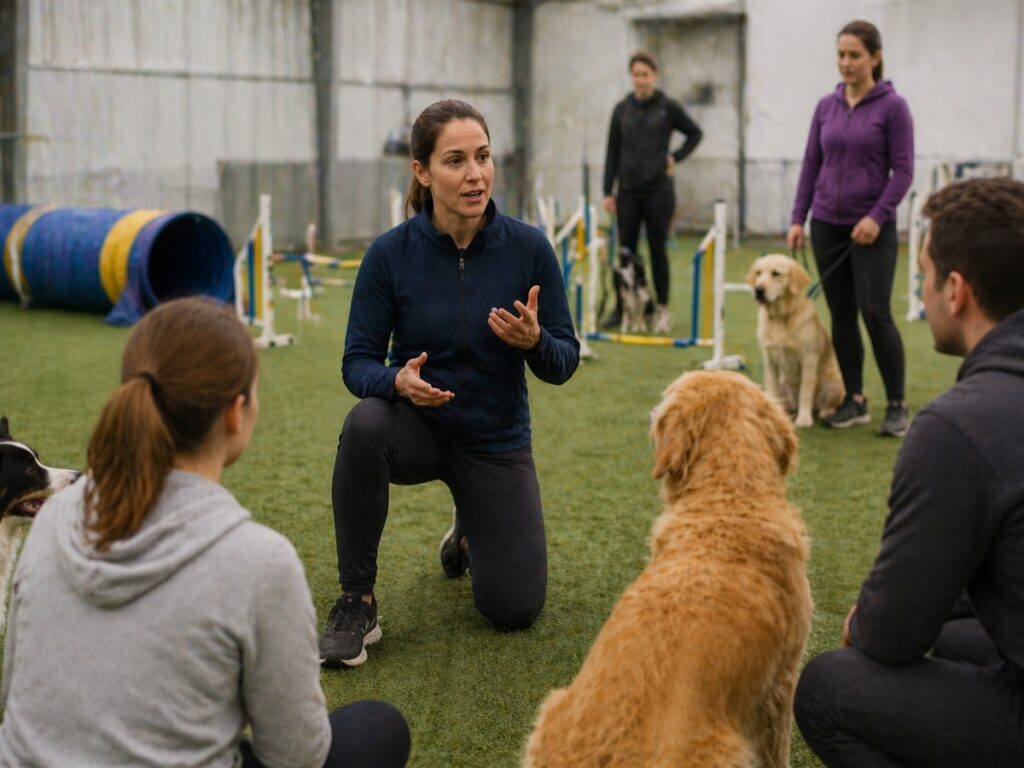
Dog agility training focuses on teaching dogs how to move confidently through obstacle courses while staying connected to their handler. It combines physical activity with mental engagement, requiring dogs to listen, respond, and adapt in real time.
The result is a training experience that builds coordination, focus, and trust. In group classes agility settings, this process becomes more dynamic.
Dogs are not only learning the mechanics of each obstacle but also how to stay engaged despite the presence of other dogs, people, and movement around them. This added layer of distraction is intentional and plays an important role in shaping reliable behavior.
How Positive Reinforcement Shapes Agility Skills
At the core of most agility training is positive reinforcement. Instead of correcting mistakes harshly, trainers reward dogs when they complete a task correctly or make progress toward it. This approach encourages dogs to repeat the desired behavior and keeps the training experience enjoyable.
In group classes agility sessions, timing becomes especially important. Handlers learn when to reward, how to mark success, and how to guide their dog without overwhelming them. Over time, this creates a clear communication system that helps the dog understand what is expected.
This method also supports confidence. Dogs that are rewarded consistently tend to approach new obstacles with curiosity rather than hesitation. As they gain experience, they become more willing to try new challenges and recover quickly from mistakes.
Why Group Formats Improve Focus And Control
Training in a group setting introduces controlled distractions that are difficult to replicate in a private session.
Other dogs running courses, handlers giving commands, and general activity in the space all create a more realistic environment. Learning to stay focused in this setting helps dogs develop stronger self-control.
Group classes agility training also allows instructors to guide multiple teams through similar exercises while adjusting difficulty levels as needed.
Beginners might work on simple obstacle introductions, while more advanced participants focus on refining speed, accuracy, and transitions between obstacles.
This layered approach helps each dog progress without feeling overwhelmed. It also gives handlers a chance to observe how others manage similar challenges, which can provide useful insight into their own training approach.
How Handlers Build Better Communication Skills
Agility is not just about what the dog does. It is equally about how the handler moves and communicates. Subtle shifts in body position, timing, and direction all influence how a dog responds on the course.
In group classes agility environments, handlers receive feedback in real time. Instructors can point out small adjustments that make a big difference, such as changing foot placement or improving the timing of a cue. These refinements help create smoother, more consistent runs.
Handlers also become more aware of their dog’s signals. Recognizing when a dog is unsure, distracted, or ready to move forward allows for quicker adjustments. This awareness strengthens the partnership and makes training more effective.
Building A Strong Foundation Through Group Classes Agility
Group classes agility training offers more than just obstacle practice. It creates a structured space where dogs and handlers can grow together. By combining positive reinforcement, controlled distractions, and guided instruction, these classes help build skills that carry over into everyday life.
As consistency develops, both dog and handler become more confident in their abilities. The training becomes less about individual obstacles and more about working as a team.
Over time, this shared progress leads to better performance, stronger communication, and a more enjoyable training experience overall.
How Group Training Enhances Canine Fitness and Obedience
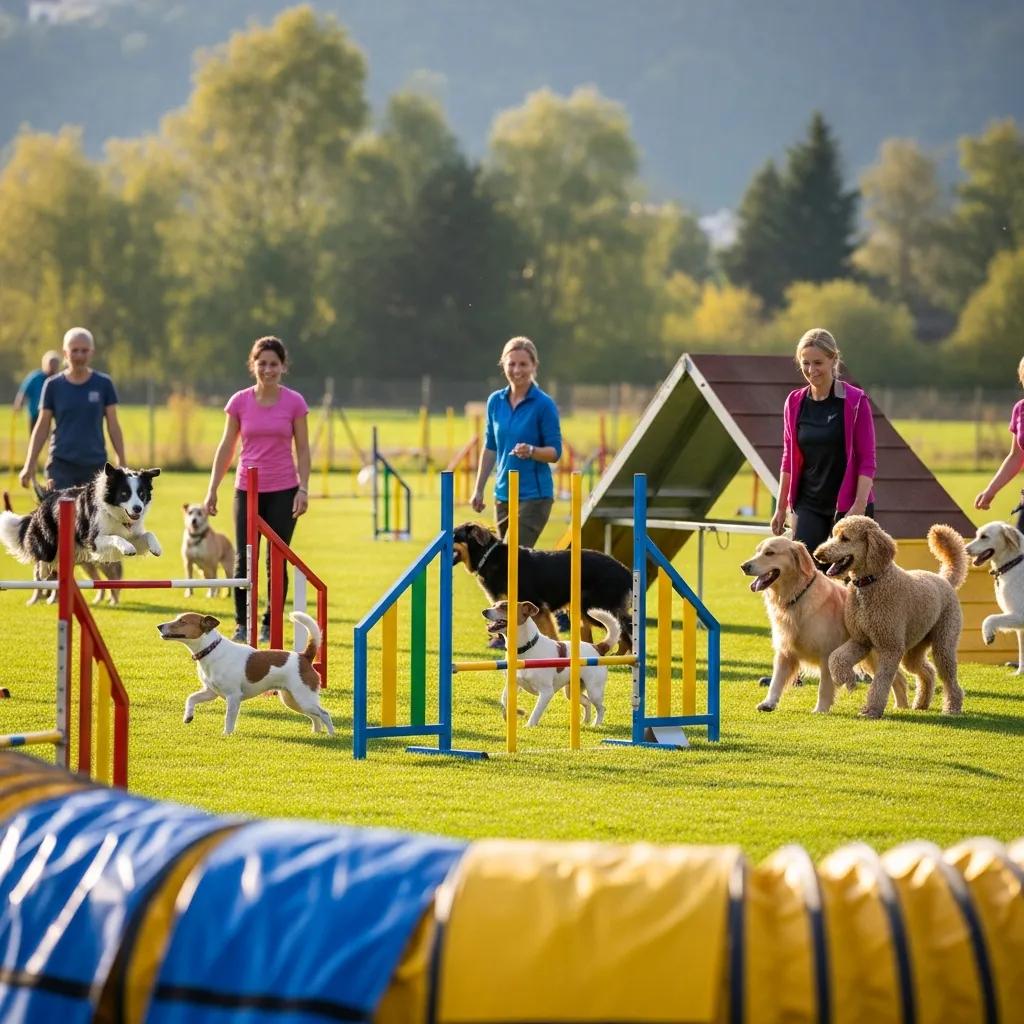
Training in a group setting offers more than just a change of environment. It creates a structured space where dogs can develop both physical strength and behavioral control at the same time.
In group classes agility sessions, dogs are guided through exercises that challenge their coordination, endurance, and responsiveness, all while learning to stay focused around distractions.
This combination of movement and discipline is what makes agility training so effective. Dogs are not simply running through obstacles. They are learning how to listen, adjust, and respond in real time, which naturally strengthens obedience alongside fitness.
How Physical Challenges Improve Strength And Coordination
Agility courses are designed to engage a dog’s entire body. Jumping, weaving, and navigating tunnels require balance, flexibility, and controlled movement. Over time, these activities build muscle tone and improve overall coordination.
In group classes agility training, these physical benefits are reinforced through repetition and gradual progression.
Dogs begin with simpler tasks and move toward more complex sequences as their confidence grows. This steady development helps prevent injury while ensuring that each dog builds strength at a comfortable pace.
Regular participation also supports long-term health. Dogs that stay active through structured training are more likely to maintain a healthy weight and better mobility, especially as they age.
How The Group Environment Strengthens Obedience
One of the biggest advantages of group training is the presence of controlled distractions. Other dogs, handlers, and activity in the space create a setting that encourages focus and self-control.
Learning to follow commands in this environment helps dogs become more reliable in everyday situations. In group classes agility sessions, dogs practice responding to cues even when their attention is pulled in different directions.
This reinforces discipline in a way that isolated training cannot always achieve. Over time, dogs learn to prioritize their handler’s guidance, which strengthens overall obedience.
This environment also helps reduce impulsive behavior. Dogs become more accustomed to waiting their turn, staying calm, and maintaining focus, all of which contribute to better behavior outside of training.
How Social Interaction Supports Behavioral Growth
Beyond physical and obedience benefits, group training introduces an important social element. Being around other dogs in a structured setting allows for controlled interaction, which can improve confidence and reduce anxiety in unfamiliar situations.
In group classes agility training, dogs learn to coexist with others without becoming overwhelmed. This exposure helps them become more comfortable in shared spaces, whether at parks, events, or daily walks. For many dogs, this kind of social experience plays a key role in developing balanced behavior.
Handlers also benefit from this shared environment. Watching how other dogs respond to training can offer insight and encouragement, making the learning process feel more collaborative.
Creating Well-Rounded Results Through Group Classes Agility
The combination of physical activity, structured learning, and social exposure makes group classes agility training especially effective. Each element supports the others, creating a more complete training experience.
As dogs build strength and coordination, they also develop better focus and responsiveness. At the same time, the group setting encourages patience and adaptability. Together, these improvements lead to dogs that are not only more fit, but also more attentive and well-behaved.
Over time, this approach helps create a balanced routine where both dog and handler continue to grow. The result is a stronger partnership built on clear communication, consistent practice, and shared progress.
Which Agility Obstacle Courses Are Used in Group Classes?
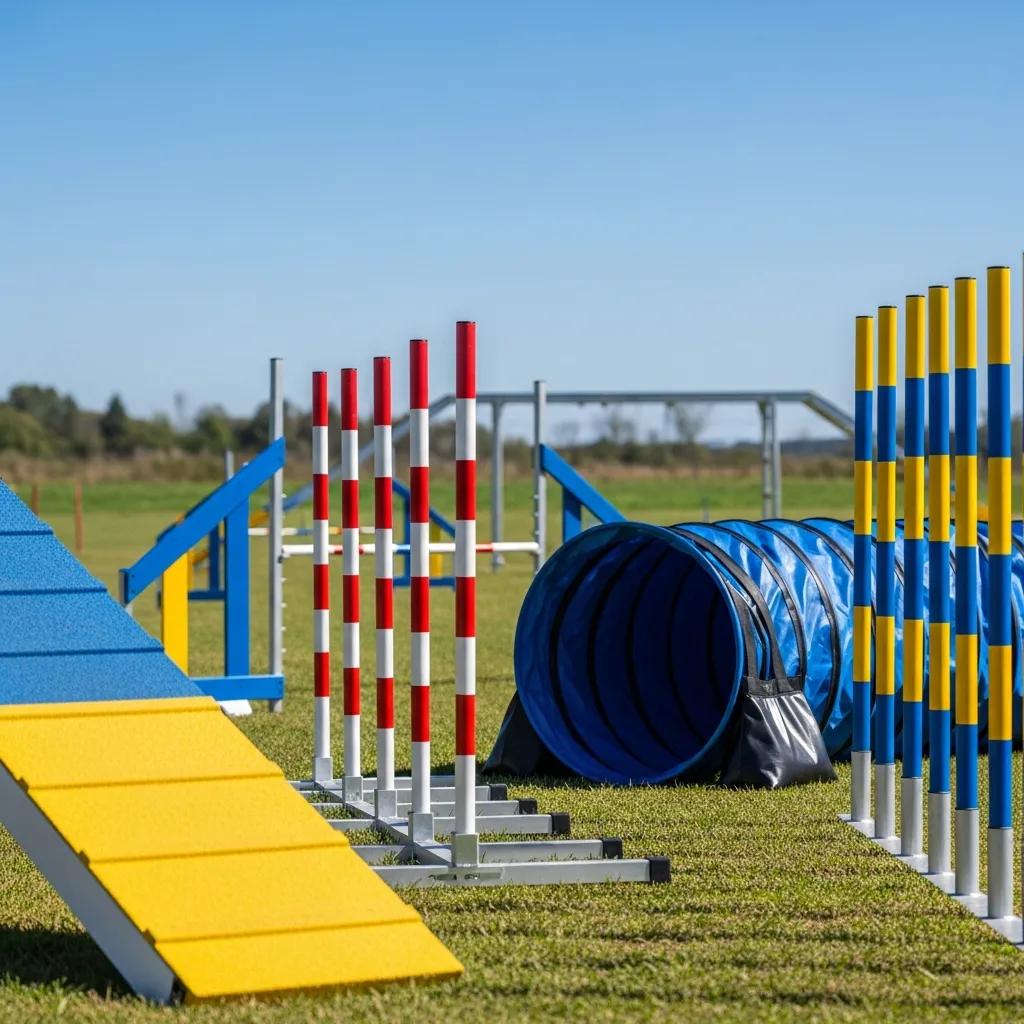
Agility courses are built to challenge a dog’s movement, focus, and responsiveness in a structured way. In group classes agility sessions, these courses are carefully arranged so dogs can learn each obstacle step by step while also practicing how to transition between them.
The goal is not just to complete individual obstacles, but to move through the entire course smoothly with clear communication from the handler.
Most courses include a mix of equipment that tests different skills. Jumps, tunnels, weave poles, and balance-based obstacles like the seesaw or A-frame are commonly used.
Each element serves a specific purpose, helping dogs develop coordination, confidence, and control.
How Different Obstacles Build Specific Skills
Every obstacle in an agility course is designed to strengthen a particular ability. Jumps focus on timing and body control, encouraging dogs to approach with the right speed and takeoff point. As dogs improve, they learn how to adjust their stride and land safely, which supports overall coordination.
Tunnels introduce a different kind of challenge. Because they are enclosed, they require a level of trust and confidence. In group classes agility training, tunnels are often one of the first obstacles dogs learn because they help build enthusiasm while reinforcing the idea of following the handler’s direction.
Weave poles demand precision and focus. Dogs must move through a series of poles in a specific pattern, which takes practice and patience. This obstacle improves body awareness and teaches dogs to stay engaged with their handler even during repetitive movements.
More advanced elements, such as the seesaw or A-frame, add a balance component. These obstacles encourage careful movement and control, helping dogs understand how to shift their weight and maintain stability.
How Group Classes Agility Training Introduces Obstacles
In a group setting, obstacles are introduced gradually to ensure each dog builds confidence at a comfortable pace. Instructors typically break down each skill into smaller steps, allowing dogs to succeed early and build from there.
Group classes agility sessions also give dogs the opportunity to observe and learn in a shared environment. While one team is working, others are watching, which can help some dogs become more comfortable with unfamiliar equipment. This exposure reduces hesitation and encourages steady progress.
Handlers are guided on how to position themselves and give clear cues as their dogs approach each obstacle. This guidance is essential, as even small changes in movement can affect how a dog navigates the course.
How Course Design Encourages Problem Solving
Beyond individual obstacles, the layout of the course plays a major role in training. In group classes agility environments, courses are designed to challenge dogs to think about how to move from one obstacle to the next. This builds adaptability and improves decision-making during runs.
A well-planned course keeps dogs engaged by mixing different types of challenges. For example, a fast sequence of jumps might be followed by a slower, more controlled obstacle like weave poles. This variation prevents monotony and helps dogs stay mentally involved.
Handlers also benefit from this design. They learn how to guide their dog through changing patterns, which improves timing and communication. Over time, this creates smoother, more efficient movement across the entire course.
Why Variety Matters In Group Classes Agility
Variety is key to keeping both dogs and handlers motivated. In group classes agility training, changing course layouts and obstacle combinations ensures that each session feels different. This not only prevents boredom but also prepares dogs for a wider range of scenarios.
As dogs gain experience, they become more comfortable with new challenges and less dependent on repetition. This flexibility is an important part of agility training and contributes to long-term success.
By combining diverse obstacles with thoughtful course design, group classes agility sessions create an environment where dogs can develop physical skill, confidence, and focus all at once.
What Are The Benefits Of Participating In Group Dog Training Classes?
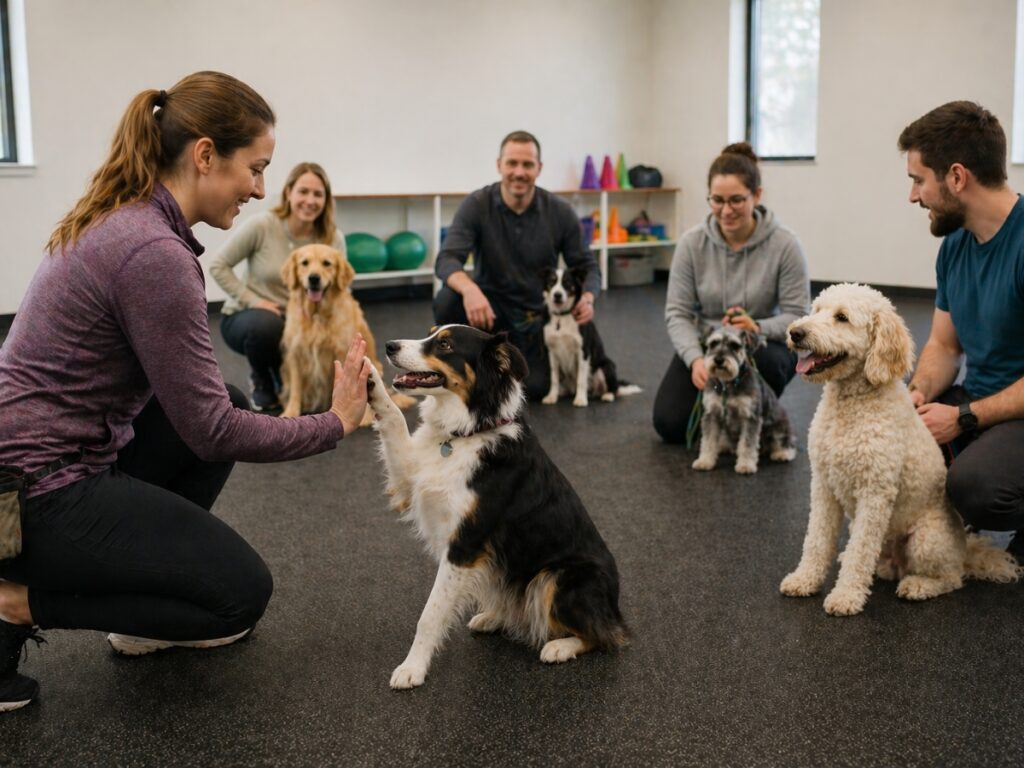
Training in a group setting offers a broader experience than working alone. In group classes agility sessions, dogs and handlers develop skills together while also learning how to function in a shared environment. This combination of structured training and social exposure creates a more balanced learning process for both.
For dogs, the presence of others helps build confidence and reduces sensitivity to distractions. For owners, it introduces a sense of accountability and consistency that can be harder to maintain when training independently. Over time, this shared environment supports steady progress and stronger results.
How Group Classes Agility Training Supports Physical Health
Agility training naturally encourages movement, which plays a key role in maintaining a dog’s physical health. Running through courses, navigating obstacles, and changing direction all contribute to improved coordination and endurance.
In group classes agility sessions, these physical benefits are reinforced through regular practice. Dogs gradually build strength and stamina as they repeat exercises and work through increasingly complex sequences. This helps support healthy weight management and overall mobility.
Beyond fitness, the structure of agility training also reduces the risk of injury by teaching dogs how to move with control. Instead of random bursts of activity, dogs learn how to approach obstacles with proper technique, which supports long-term physical well-being.
How Mental Stimulation Improves Behavior
Agility training is not just about movement. It requires focus, decision-making, and responsiveness. Each obstacle presents a small challenge that keeps dogs mentally engaged throughout the session.
In group classes agility environments, this mental stimulation becomes even more valuable. Dogs must stay attentive despite the presence of other dogs and activity around them. This helps improve concentration and reduces impulsive behavior over time.
When dogs are mentally engaged, they are less likely to develop habits driven by boredom or frustration. This can lead to noticeable improvements in behavior both during training and in everyday situations.
How Social Interaction Builds Confidence
One of the most noticeable benefits of group training is the opportunity for controlled social interaction. Dogs learn how to exist around others without becoming overwhelmed, which is an important part of developing stable behavior.
In group classes agility sessions, dogs are exposed to different personalities and energy levels in a structured way. This helps reduce fear or overexcitement when encountering other dogs outside of training. Over time, this exposure builds confidence and encourages calmer responses in social settings.
For many dogs, this kind of environment helps create a more relaxed and adaptable mindset. They learn that being around others does not always require a reaction, which supports better overall behavior.
How Owners Benefit From Shared Learning
Handlers also gain a great deal from participating in group training. Watching other teams work through challenges can provide new ideas and perspectives. It becomes easier to understand timing, positioning, and communication by seeing how different approaches affect outcomes.
Instructors in group classes agility settings often provide feedback that applies to multiple participants, which creates additional learning opportunities. Owners can refine their techniques not only through direct instruction but also through observation.
There is also a sense of community that develops over time. Training alongside others creates a supportive environment where progress is shared and encouraged. This can make the process more enjoyable and easier to stay committed to.
Why Group Classes Agility Training Creates Lasting Results
The combination of physical activity, mental engagement, and social exposure makes group classes agility training especially effective. Each element reinforces the others, creating a well-rounded experience that supports both skill development and overall well-being.
As dogs become more confident and responsive, and handlers become more consistent in their communication, the training begins to carry over into daily life. The result is a stronger partnership built on trust, clarity, and shared progress.
How Are Canine Agility Exercises Structured In Group Settings?
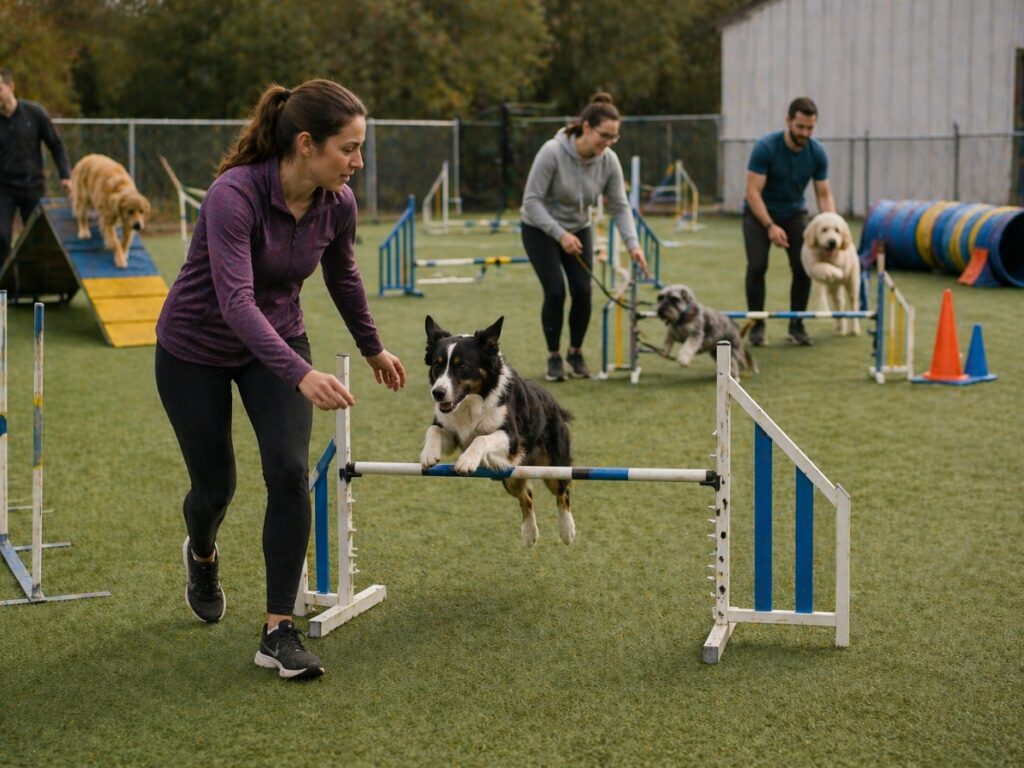
Agility training in a group environment follows a clear structure that helps dogs learn without feeling overwhelmed. Most sessions begin with a short warm-up to get dogs moving and focused.
This early phase is not just about physical readiness, but also about helping dogs settle into the space and adjust to the presence of other participants.
Once the group is engaged, trainers introduce individual obstacles or short sequences. In group classes agility sessions, these exercises are carefully planned so dogs can build skills step by step.
Rather than rushing into full courses, handlers guide their dogs through manageable challenges that gradually increase in difficulty. This steady progression helps prevent frustration and allows each dog to develop confidence at a comfortable pace.
As the session continues, these individual elements are often combined into short course runs. This mirrors real agility scenarios while still keeping the learning environment supportive and controlled.
How Training Progression Works Across Skill Levels
One of the strengths of group classes agility training is how it adapts to different experience levels. Beginners are not expected to keep up with advanced dogs, and experienced teams are still challenged in meaningful ways.
For newer participants, the focus stays on fundamentals. Dogs learn how to approach obstacles, respond to basic cues, and stay engaged despite distractions. Handlers also learn timing and positioning, which are essential for clear communication.
As dogs gain experience, the training shifts. More advanced groups begin working on flow, speed, and precision. Instead of learning what each obstacle is, the emphasis becomes on how to connect them smoothly. This layered approach ensures that every participant continues progressing without repeating the same level of difficulty.
In group classes agility settings, this progression often happens within the same session. Trainers may adjust exercises slightly for each team, allowing everyone to work at an appropriate level while still participating together.
How Structured Practice Builds Real-World Skills
Group agility sessions are designed to prepare dogs for more than just the training field. The structured format helps dogs learn how to perform tasks even when there are distractions nearby. This is a key difference from solo training, where conditions are easier to control.
By practicing in a shared environment, dogs become more reliable in their responses. They learn to focus on their handler instead of reacting to other dogs or movement around them. Over time, this carries over into everyday situations, making dogs easier to manage in public or unfamiliar settings.
Handlers also benefit from this structure. Repeating exercises in a consistent format helps reinforce good habits, making it easier to guide their dogs with clarity and confidence.
How Motivation And Engagement Are Maintained
Keeping dogs motivated is an important part of any agility program. In group classes agility training, this is built directly into how sessions are run. Trainers use rewards, encouragement, and small wins to keep dogs engaged throughout the class.
Instead of long, repetitive drills, exercises are often short and varied. This keeps energy levels up and prevents boredom. Dogs are more likely to stay focused when they are moving between different tasks and receiving immediate feedback.
Positive reinforcement plays a central role here. When dogs successfully complete an obstacle or respond correctly, they are rewarded in a way that makes the experience enjoyable. Over time, this builds a strong association between training and positive outcomes.
Why Structure Matters In Group Classes Agility Training
The structure of group agility classes is what makes them effective. Each phase of the session, from warm-up to skill building to course practice, serves a clear purpose. Together, these elements create an environment where dogs can learn steadily while staying engaged.
By combining progression, consistency, and motivation, group classes agility training helps both dogs and handlers improve in a way that feels natural and sustainable. The result is not just better performance on the course, but a stronger working relationship that continues to develop outside of class.
How Group Classes Build Competition-Ready Skills
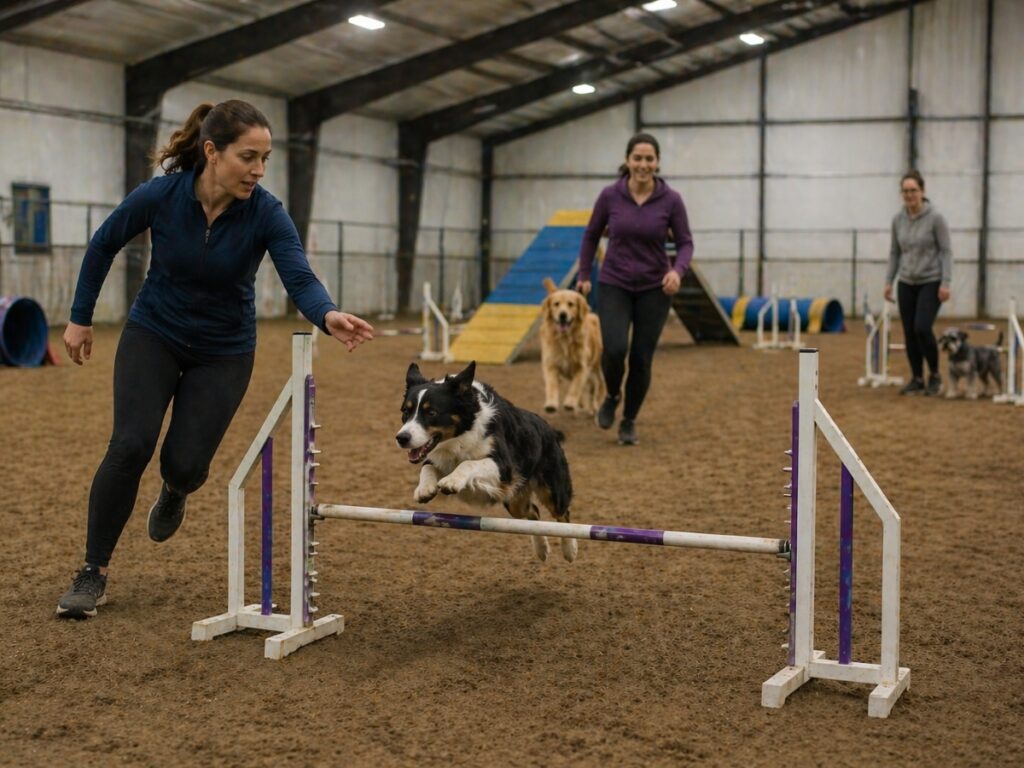
Preparing for agility competitions takes more than learning individual obstacles. Dogs need to handle sequences, stay focused under pressure, and respond quickly to their handler’s cues. This is where group classes agility training becomes especially valuable.
In a group setting, dogs are exposed to movement, noise, and other dogs working nearby. These elements closely resemble what they will encounter in real competitions.
Instead of training in a quiet, controlled space, dogs learn to stay engaged even when distractions are present. Over time, this improves reliability and helps reduce hesitation during actual runs.
Handlers also gain experience reading courses and guiding their dogs through more complex patterns. Practicing these skills in group classes agility sessions allows teams to refine timing, positioning, and communication before stepping into a competitive environment.
Simulating Real Competition Conditions
One of the biggest advantages of group training is the ability to recreate the rhythm of a real event. Trainers often set up short course sequences that mirror competition layouts, giving dogs the chance to practice transitions between obstacles rather than treating each one as a separate task.
These simulated runs help dogs develop consistency. They begin to understand how to move from one obstacle to the next without losing focus, which is essential for maintaining speed and accuracy. At the same time, handlers learn how to adjust their cues based on the flow of the course.
Group classes agility sessions also introduce waiting turns, watching other dogs run, and entering the course when called. These small but important details can make a noticeable difference in how calmly a dog approaches competition day.
Training Progression From Beginner To Advanced Levels
Agility training typically follows a steady progression, and group classes are designed to support that journey from the ground up. For beginners, the focus is on building a strong foundation. Dogs learn basic commands, develop confidence around equipment, and start to understand how to follow their handler’s direction.
As skills improve, the training becomes more technical. Dogs are introduced to longer sequences, tighter turns, and more precise movements. Handlers begin working on strategies such as choosing the best line through a course or adjusting speed to maintain control.
In more advanced group classes agility programs, the emphasis shifts toward refinement. Small adjustments in timing, positioning, and communication can significantly improve performance. This stage is where teams begin to feel truly competition-ready, with the ability to handle a variety of course setups.
Building Confidence Through Repetition And Exposure
Confidence plays a major role in agility performance, and group training helps build it in a practical way. Repeated exposure to different setups, environments, and distractions allows dogs to become more comfortable with change.
Instead of reacting to new situations with uncertainty, dogs learn to rely on their training. This confidence carries over into competitions, where unfamiliar courses and surroundings are the norm.
Handlers benefit from this repetition as well. The more they practice in group classes agility settings, the more natural their movements and decisions become. This helps reduce hesitation during runs and creates smoother, more coordinated teamwork.
Why Group Classes Are A Smart Step Toward Competition
For teams considering agility competitions, group training offers a clear path forward. It combines skill development with real-world practice, helping both dogs and handlers prepare in a way that feels natural and manageable.
Rather than jumping straight into competition, group classes agility training allows for gradual exposure. Dogs learn how to perform under pressure, and handlers gain the experience needed to guide them effectively. By the time they reach an event, both are better equipped to handle the challenges of the course with confidence and control.
Tips For Success In Canine Agility Events
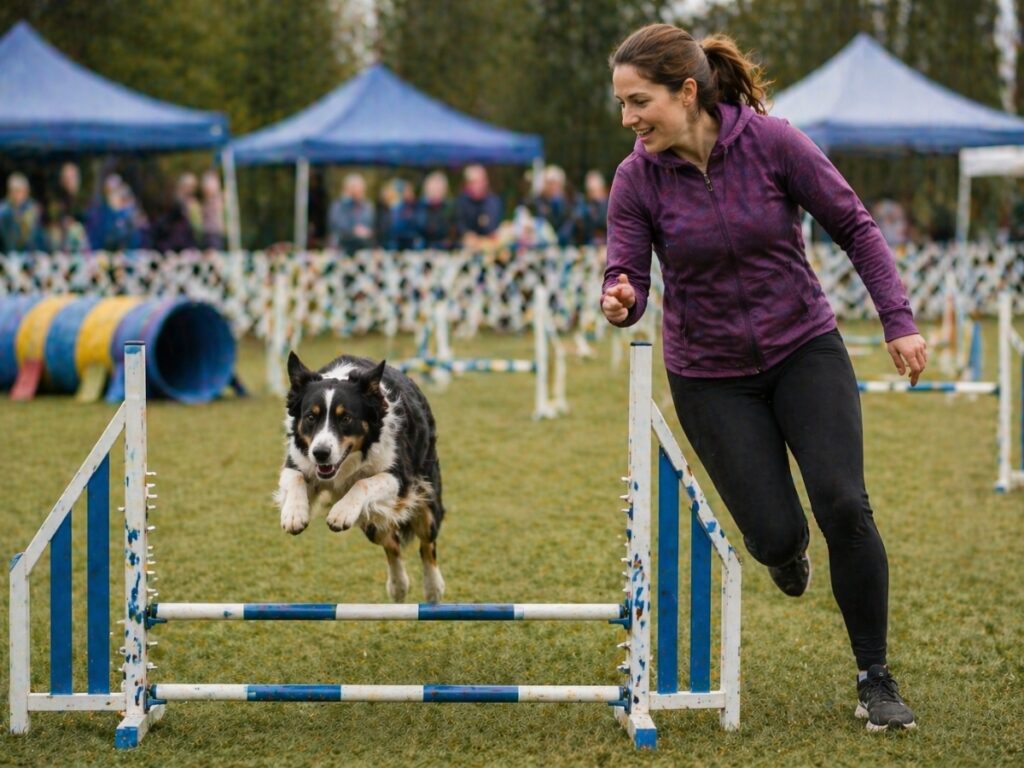
Succeeding in agility competitions takes more than knowing the obstacles. It comes down to consistency, communication, and how well a dog and handler work together under pressure. While every team develops its own rhythm, there are a few core habits that can make a noticeable difference over time.
Build Consistency Through Regular Practice
One of the most reliable ways to improve performance is steady, consistent training. Dogs learn best through repetition, especially when that repetition happens in a structured environment. Practicing regularly helps reinforce muscle memory, making movements feel automatic rather than forced.
Group classes agility training is particularly helpful here because it introduces variety while still maintaining structure. Each session presents slightly different setups, which prevents dogs from becoming too dependent on familiar patterns.
This kind of exposure helps them adapt more easily during competitions, where no two courses are exactly the same. For handlers, consistent practice also builds confidence. The more often they guide their dogs through sequences, the more natural their timing and positioning become.
Use Positive Reinforcement To Maintain Motivation
Agility should feel engaging for the dog, not stressful. Positive reinforcement plays a key role in keeping that balance. When dogs are rewarded for effort and progress, they stay motivated and more willing to try new challenges.
This approach is especially effective in group classes agility sessions, where dogs may initially feel distracted by other participants.
Rewarding focus, even in short bursts, helps reinforce the behavior you want to see. Over time, dogs learn that staying engaged with their handler leads to positive outcomes, even in busy environments.
Small wins matter. Whether it is completing a sequence smoothly or simply maintaining focus, acknowledging progress keeps training productive and enjoyable.
Strengthen Communication Between Handler And Dog
Clear communication is at the center of every successful agility run. Dogs rely on subtle cues such as body position, movement, and timing to understand what comes next. When these signals are inconsistent, it can lead to hesitation or mistakes on the course.
Improving communication starts with awareness. Handlers need to pay attention to how their movements influence their dog’s path. Practicing this in a group setting adds another layer of challenge, since distractions test how well those cues hold up under pressure.
Group classes agility training naturally supports this skill. As dogs become more comfortable working around others, handlers learn how to give clearer, more deliberate guidance. This leads to smoother runs and fewer missteps during competitions.
Prepare For The Pace And Pressure Of Events
Agility events move quickly, and the environment can feel very different from a training session. Dogs may encounter new sights, sounds, and energy levels that affect their focus. Preparing for this shift is just as important as practicing the course itself.
Training in a group helps bridge that gap. It introduces elements of unpredictability, such as waiting turns or working near other dogs, which are common in competitions. This exposure helps dogs stay composed when it matters most.
Handlers also benefit from this preparation. Getting used to performing in front of others, even in a casual class setting, can make competition day feel far less overwhelming.
Focus On Progress, Not Perfection
Agility is a skill that develops over time, and progress rarely happens in a straight line. Some days will feel smoother than others, and that is part of the process. Instead of aiming for perfect runs every time, it is more productive to focus on steady improvement.
Group classes agility environments support this mindset by offering a space to learn, adjust, and try again without pressure. Each session becomes an opportunity to refine skills, build confidence, and strengthen the partnership between dog and handler.
Over time, these small improvements add up. What starts as basic coordination gradually turns into a confident, capable team ready to handle the demands of competition.
What Are Common Questions About Dog Agility Group Classes?
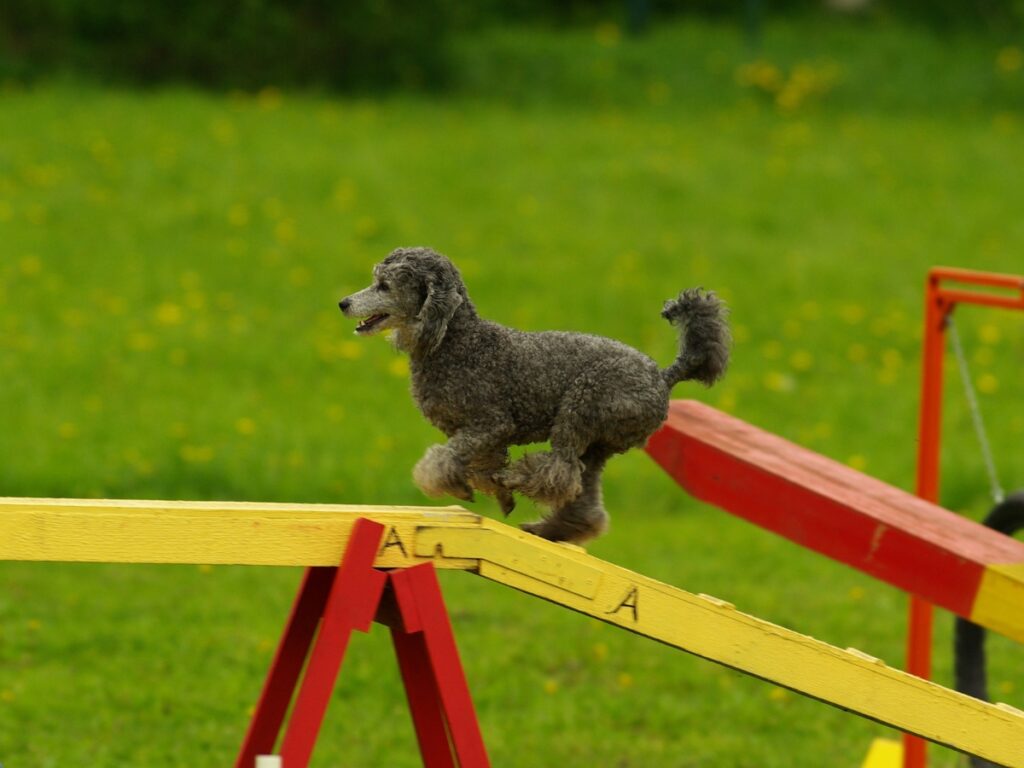
For many dog owners, joining group classes agility programs comes with a mix of excitement and uncertainty. It is natural to have questions before getting started, especially when considering how your dog will adapt to a structured group environment.
Understanding what to expect can make the transition smoother and help you get the most out of the experience.
What Is The Purpose Of Group Classes?
At their core, group classes agility sessions are designed to develop a dog’s physical coordination, responsiveness, and focus.
While agility often looks like a fast-paced obstacle course, the real goal goes deeper. These classes help dogs learn how to follow direction, stay engaged with their handler, and move with confidence in a dynamic setting.
The group format adds another layer of value. Training alongside other dogs introduces real-world distractions in a controlled way.
This helps dogs build focus and adaptability, which are essential skills both in agility and in everyday situations. For handlers, it also provides an opportunity to observe different training styles and learn from shared experiences.
What Should Dogs Know Before Joining?
Most group classes agility programs do not expect dogs to have prior agility experience, but a basic level of obedience is usually important.
Dogs should be able to respond to simple commands such as sit, stay, and come when called. These foundational skills make it easier to introduce agility concepts without overwhelming the dog.
In addition to training basics, many facilities require dogs to be current on vaccinations. This helps ensure a safe environment for all participants.
Some programs may also suggest an initial evaluation, especially if a dog is new to group settings, to determine the best starting level.
For owners, preparation is just as important. Bringing patience, consistency, and a willingness to learn will go a long way in helping both you and your dog succeed.
Are Group Classes Suitable For All Temperaments?
Not every dog is immediately comfortable in a group setting, and that is okay. Some dogs may feel unsure or overly excited when surrounded by others. This does not necessarily mean they cannot participate, but it does mean their introduction should be handled thoughtfully.
Group classes agility environments are typically structured to allow space between dogs, reducing stress and preventing overcrowding.
Trainers often guide handlers on how to manage their dog’s focus and gradually build confidence. For dogs that are more reactive or anxious, starting with smaller class sizes or beginner sessions can make a meaningful difference.
If there are concerns about behavior, discussing them with a trainer beforehand can help determine whether group training is the right fit or if a more gradual approach is needed.
What Does A Typical Class Experience Look Like?
A typical session is organized to balance learning with engagement. Dogs are given time to warm up, practice specific skills, and then apply those skills in short sequences. The pace is intentional, allowing dogs to absorb new information without becoming overwhelmed.
In group classes agility settings, there is also an emphasis on taking turns and observing others. While one dog works, others wait nearby, which teaches patience and reinforces calm behavior.
This structure mirrors real-world scenarios, helping dogs become more composed in shared environments. Over time, this routine becomes familiar. Dogs begin to anticipate the flow of the class, which can improve both focus and confidence.
Why Understanding Expectations Matters
Taking the time to understand how group classes work helps set realistic expectations from the start. Rather than focusing only on performance, these sessions are about building skills gradually and creating a positive training experience.
Group classes agility training is not just about navigating obstacles. It is about developing a reliable connection between dog and handler, one that holds up even when distractions are present. When both owner and dog understand the process, the experience becomes more enjoyable and far more effective. enrolling.
Conclusion
Agility training is more than just a fun activity—it’s a powerful way to build confidence, strengthen your bond, and provide essential mental and physical stimulation that keeps your dog engaged and fulfilled.
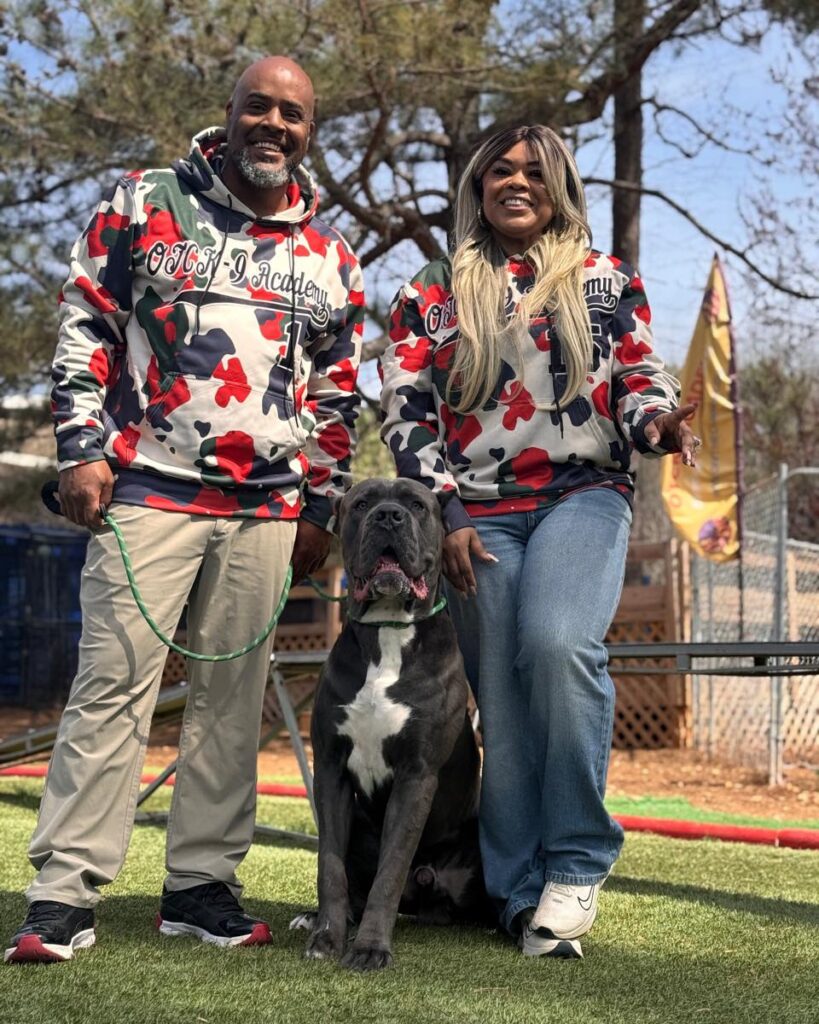
At OTCK9 Academy, our comprehensive dog training programs give dogs a job while preventing boredom-related behaviors. Ready to unlock your dog’s full potential through engaging group classes? Call 770-874-6454 or fill out our online form to learn more about our programs.
Let our experienced team help you and your dog discover the joy of agility training in a supportive, professional environment.